
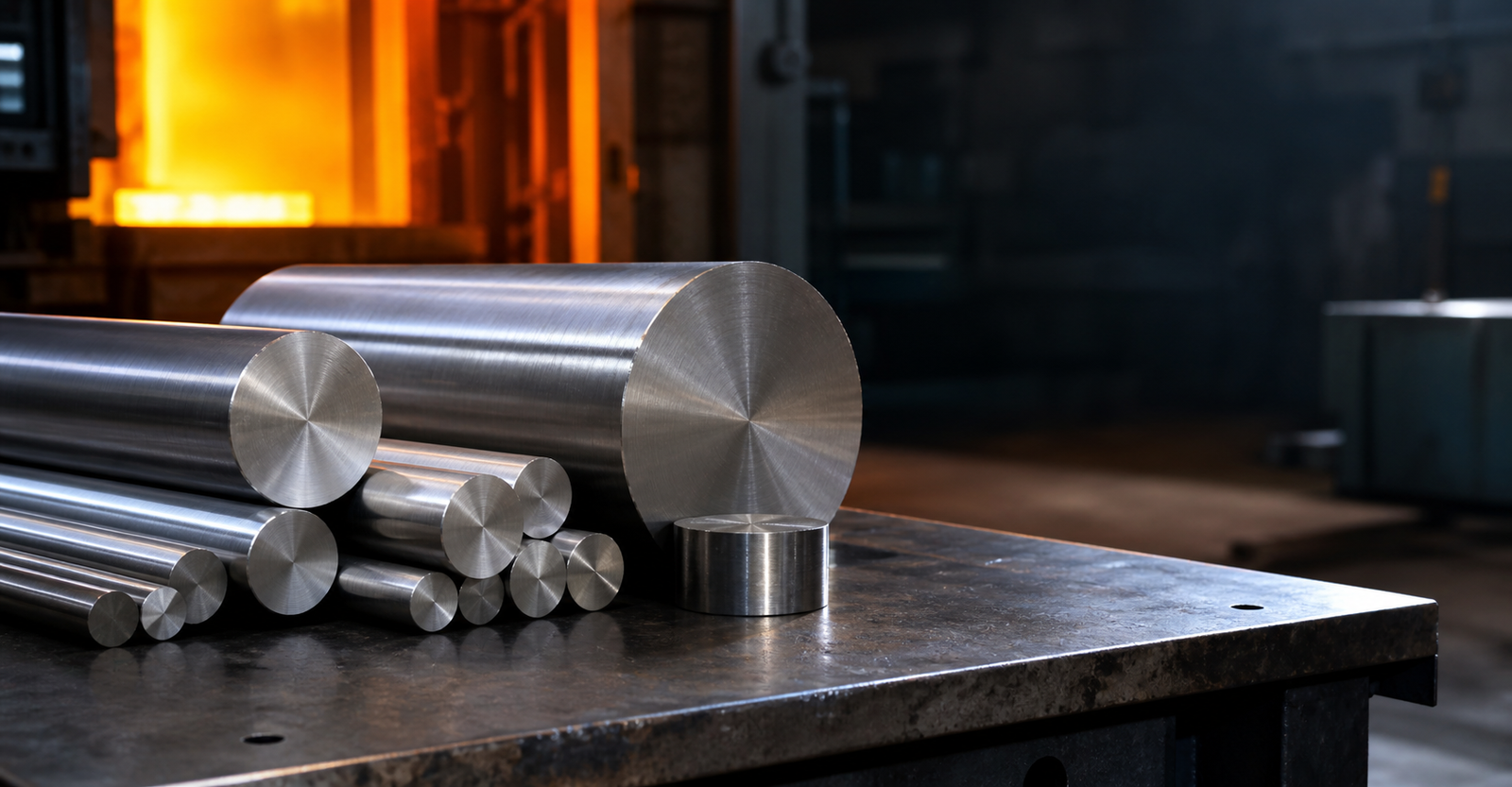
Inconel does not have one universal melting point. It is a family of nickel-based superalloys, and each grade has its own melting range based on its chemistry and intended service conditions.
Why Inconel Has a Melting Range Instead of One Exact Point
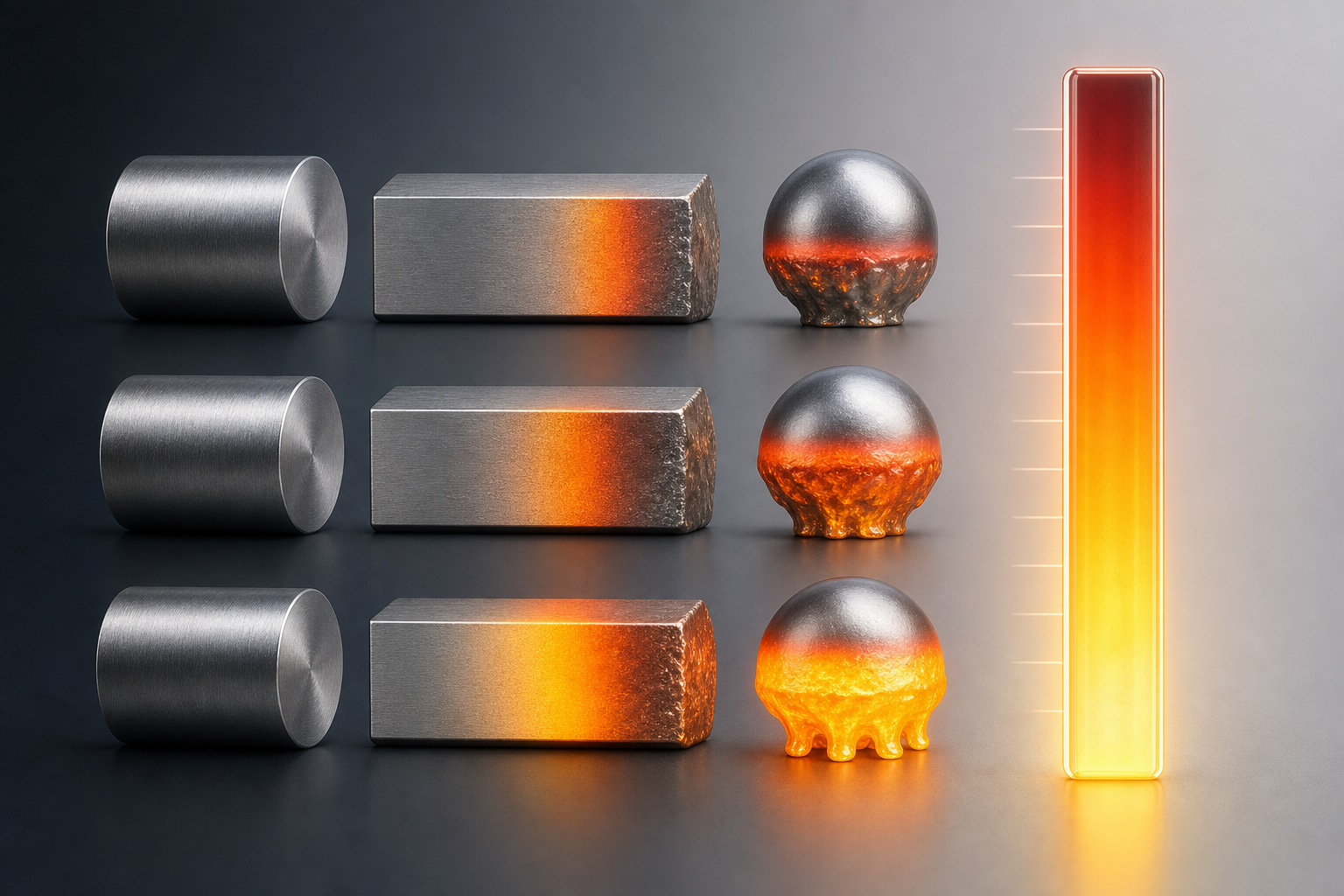
Industrial alloys rarely transition from fully solid to fully liquid at one exact temperature. Instead, they begin to soften and partially liquefy across a temperature interval. That is why manufacturers typically publish a melting range rather than a single value.
For common Inconel grades, that range often falls between about 1260 deg C and 1425 deg C, or roughly 2300 deg F to 2600 deg F. The exact range depends on the balance of nickel, chromium, iron, molybdenum, niobium, and other alloying elements.
Best short answer: most common Inconel alloys melt within an approximate range of 1260 deg C to 1425 deg C.
Typical Melting Ranges of Common Inconel Grades
| Grade | Approximate Melting Range | Notes |
|---|---|---|
| Inconel 600 | 1354 to 1413 deg C 2470 to 2575 deg F | Widely used for oxidation and corrosion resistance. |
| Inconel 625 | 1290 to 1350 deg C 2350 to 2460 deg F | Known for strong corrosion resistance and fabricability. |
| Inconel 718 | 1260 to 1336 deg C 2300 to 2437 deg F | Common in aerospace and high-strength high-temperature applications. |
| Inconel X-750 | Typically near the upper part of the broader Inconel range | Exact values vary by specification and product form. |
Why This Matters in Engineering and Fabrication
- It affects hot working and forging parameters.
- It matters when selecting welding procedures and filler materials.
- It helps engineers understand casting behavior and heat-treatment windows.
- It prevents the mistake of confusing melting temperature with usable service temperature.
In aerospace, chemical processing, marine service, power generation, and furnace equipment, Inconel is valued not simply because it resists melting, but because it keeps useful strength, oxidation resistance, and corrosion resistance where many conventional alloys lose performance.
Melting Point vs. Maximum Service Temperature
A component can operate far below its melting range and still fail if oxidation, creep, fatigue, or long-term thermal exposure are not considered. That is why designers should never use one melting-point number as the only material-selection criterion.
For example, service at 700 deg C or 900 deg C is still far below the melting range of many Inconel grades, yet those temperatures can still be demanding enough to require careful design review.
Final Takeaway
If someone asks for the melting point of Inconel in general, the most practical answer is that common Inconel alloys usually melt somewhere within about 1260 deg C to 1425 deg C, or 2300 deg F to 2600 deg F. For purchasing, fabrication, or engineering decisions, always confirm the data for the exact grade you plan to use.