
Inconel Welding Services
Weld Integrity You Can Validate — For High-Temperature, Corrosive, and Pressure-Critical Assemblies.
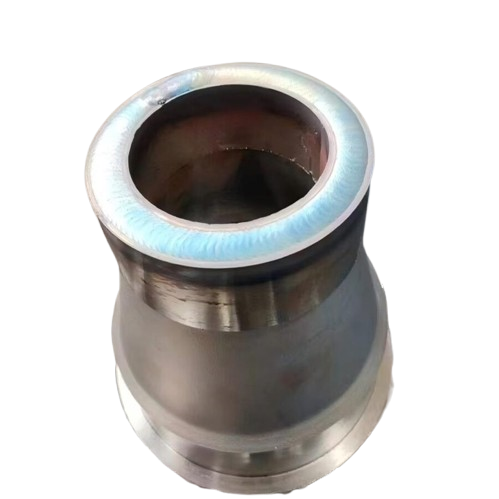
What Usually Goes Wrong?
Most suppliers lose projects on Inconel weldments for one reason: they treat it like stainless. In real programs, failures rarely come from “bad-looking beads.”
Predictable Failure Modes:
- Hot cracking in high-strength alloys
- HAZ property loss (strength/corrosion drop)
- Distortion destroying sealing faces
- Hidden porosity/lack of fusion
Our process prevents these specific failures—then proves it with documentation.
When to Choose Welding
-
Large Parts
When machining from a solid block is wasteful.
-
Thin-Wall Structures
Thermal hardware and sheet assemblies.
-
Internal Features
Pressure assemblies built from subcomponents.
-
Repair & Retrofit
Controlled distortion repair weldments.
How We Run an Inconel Weld Program
Weld Review
Joint type, access, heat input, and code assessment (ASME/Spec) before quoting.
WPS / PQR
Defining procedure scope and deliverables (WPS/PQR/WPQ) for documentation.
Fixturing
Shrink direction, restraint strategy, and tack planning to control distortion.
Post-Weld
Stress relief, solution/aging sequences, and finish machining strategy.
Verification
Dimensional checks, visual profile, and optional NDT (FPI/Radiography).
Supported Alloys & The Welding Reality
Inconel 625
Weld-Friendly Corrosion Alloy
Often acceptable as-welded. Key risk: distortion + corrosion surfaces.
Inconel 718
Strength Alloy, Sensitive
Risk is property restoration. Often requires specific PWHT sequences.
Inconel 600 / 601
Thermal Hardware
Used in furnace/thermal cycling. Risk: oxide behavior & thin-wall warpage.
Inconel X-750
Spring/Fastener Alloy
Precipitation-hardened. Sequencing is critical for mechanical performance.
Typical Inconel Weldments
Deliverables & Validation
If you’re supplying to aerospace/energy/nuclear supply chains, the “paperwork reality” decides whether you get onboarded.
-
Traceability
Heat/lot MTR + CoC.
-
Weld Documentation
WPS/PQR/WPQ aligned to spec.
-
Reports
Inspection, NDT (FPI), Weld Maps.
RFQ “Fast Lane” Checklist
STEP + Drawing (Joint callouts)
Alloy Grade + Condition
Joint Requirements (Code?)
Allowable Distortion / Datums
Post-Weld (Stress relief?)
Inspection/NDT Needs
You Get Back:
Quote + Weld Plan (Distortion Control Strategy)
FAQ: Engineer-Level
Is TIG (GTAW) always the best for Inconel?
Can you guarantee “no distortion”?
Do welded Inconel parts need heat treatment?
Can you machine after welding?
Ready to De-Risk Your Inconel Weldment?
If your program can’t afford cracking, rework, or sealing failure, don’t buy “welding hours.” Buy a validated process route.
Request Quote + Weld Review
Upload your files for engineering assessment.