
Inconel 625 Machining & Fabrication Services
Corrosion-Resistant Components for Marine, Chemical, and High-Pressure Applications. Full MTR Traceability & ASME IX Welding.
Technical feedback provided within 24–48 hours.
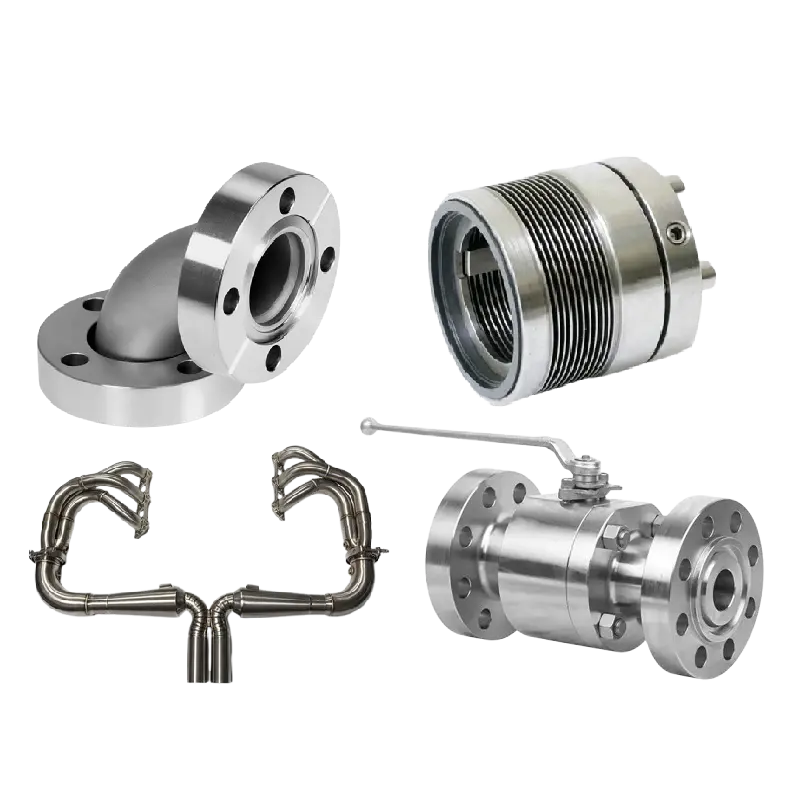
Why Inconel 625?
The Gold Standard for Corrosion Resistance
Inconel 625 (UNS N06625) is a nickel-chromium-molybdenum alloy with niobium that delivers exceptional resistance to pitting, crevice corrosion, chloride attack, and aggressive chemical media—especially where stainless steels struggle.
The challenge is manufacturing it correctly. In machining, Alloy 625 can behave “gummy,” generating heat and built-up edge. In welding, HAZ control is critical for corrosion performance.
We build process controls to prevent corrosion-driven failure under pressure and heat.
Why Engineering Teams Choose AlloyAccu
-
Risk-Managed Supply Chain
Built for corrosion-critical parts in marine & chemical sectors.
-
625-Specific Machining
Strategies to minimize work-hardening, smearing, and tool adhesion.
-
ASME IX Qualified Welding
GTAW / TIG and laser welding procedures.
-
100% Traceability
Original MTRs for every shipment by heat/lot.
Inconel 625 Manufacturing Capacity
Precision processes designed to preserve alloy performance and corrosion resistance.
Precision CNC Machining
Best for: sealing faces, valve components, manifolds.
- 3, 4, 5-axis milling & turning
- Tolerances down to ±0.005 mm
- Controlled cutting to reduce smearing
- Grade-specific carbide tooling
Welding & Fabrication
Best for: pressure housings, subsea assemblies, weldments.
- ASME Section IX qualified procedures
- GTAW/TIG & Laser welding
- Distortion control planning
- Optional stress relief
Additive Manufacturing
Best for: internal channels, complex mixers, rapid prototypes.
- DMLS for complex geometries
- Reduced Buy-to-Fly ratio
- Ideal for performance-driven designs
Sheet Metal & Forming
Best for: heat shields, covers, enclosures, rings.
- Laser cutting (0.5mm – 6.0mm)
- Precision bending
- Near-net shape solutions
Finishing & Secondary Operations
- Bead blasting for functional surfaces
- Electropolishing for chemical resistance
- Precision grinding (Ra 0.4 µm)
- Cleanliness-driven processing
Inconel 625 Parts We Manufacture Most Often
Marine & Subsea
- • Subsea valve bodies & bonnets
- • Corrosion-resistant flanges
- • Connector components & rings
- • Pressure housings
- • Pump sleeves & wear rings
Chemical Processing
- • Valve trim (seats, cages, stems)
- • Reactor & vessel components
- • High-corrosion manifolds
- • Mixer components & impellers
- • Heat exchanger end plates
Oil & Gas
- • Choke bodies & orifice parts
- • High-pressure manifolds
- • Threaded couplings & subs
- • Sensor housings
- • Flare & exhaust hardware
Aerospace
- • Exhaust flanges & bellows
- • Corrosion-resistant housings
- • Ducting hardware
- • High-temp joints
Semiconductor
- • Vacuum flanges & clamps
- • Gas delivery manifolds
- • High-integrity fittings
- • Sealing hardware
Common Geometry Strengths
Sealing faces, O-ring glands, deep bores, thin walls, threads, and welded assemblies.
Technical Specifications: Inconel 625 vs 718
| Property | Inconel 625 | Inconel 718 |
|---|---|---|
| Primary Advantage | Superior Corrosion Resistance | Superior Tensile Strength |
| Machining Behavior | “Gummy,” smearing risk | Hard, rapid tool wear |
| Weldability | Excellent; often as-welded | Complex; often requires aging |
| Typical Hardness | ~15–25 HRC (annealed) | ~36–44 HRC (aged) |
| Best-fit Environments | Seawater, acids, chlorides | High load, high temp strength |
Helpful for material selection and procurement justification.
Preserving Corrosion Resistance
Corrosion performance is not just chemistry—it’s also surface integrity and metallurgical control.
Surface Integrity (Machining)
Cutting strategies to reduce smearing and micro-tearing. Parameter control prevents severe work-hardening. Tooling geometry maintains clean shearing.
HAZ Control (Welding)
ASME IX procedures with controlled heat input. Sequencing to reduce distortion. Optional stress relief for stability.
Finishing Options
Electropolishing for cleanliness. Passivation. Precision grinding on leak paths.
Reducing Cost Drivers
If past quotes were high, the reasons are predictable. Here is how we reduce them.
Quality & E-E-A-T
A risk-controlled supply chain built for professional buyers.
100% Traceability
Original MTRs by heat/lot and CoC with every shipment.
Dimensional Validation
CMM inspection, FAI, and surface roughness verification.
Optional Testing
Dye penetrant inspection (FPI) and additional reporting.
RFQ Checklist: What to Send for a Fast Quote
- STEP/solid model + PDF drawing
- Quantity (prototype / annual demand)
- Tolerance callouts & critical features
- Service environment notes
- Surface finish requirements
- Welding requirements (if any)
- Documentation needs (MTR, CoC)
FAQ: Inconel 625 Expert Q&A
Is Inconel 625 harder to machine than 316L stainless?
Do welded Inconel 625 parts require heat treatment?
How do you prevent galling or poor quality threads in 625?
Can you produce leak-tight sealing surfaces for corrosive media?
What surface finishes do you offer for corrosion resistance?
Can you help us choose between Inconel 625 and 718?
Ready to Secure Your Supply Chain?
Get the corrosion resistance your project demands—without manufacturing surprises.
Fast Turnaround
Technical feedback and quote provided within 24–48 hours.
Risk Controlled
DFM feedback focused on corrosion risk + manufacturability.
Request a Technical Quote
Upload your drawings (STEP/PDF) for engineering review.